

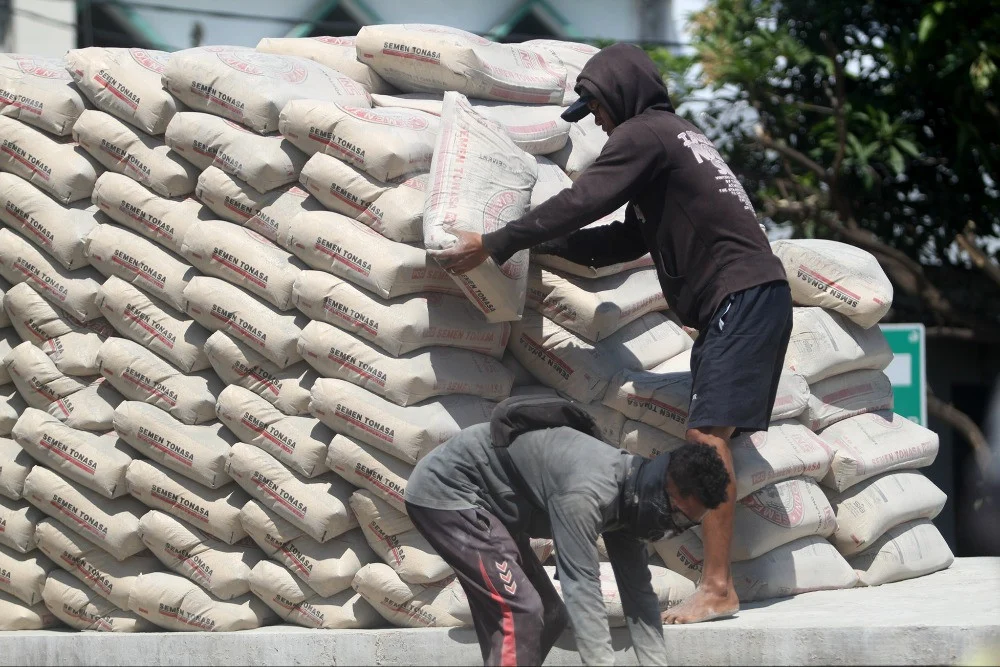
Bisnis.com, JAKARTA — Rising coal prices could lead to cement price adjustments amid factory utilization rates that have not yet fully recovered and consumer purchasing power that remains under pressure.
Chairman of the Association of Indonesian Cement Companies (ASPERSSI) Lilik Unggul Raharjo said the impact of the coal price hike is felt most by private cement producers who do not receive coal supplies through the Domestic Market Obligation (DMO) scheme.
According to him, non-state-owned enterprises purchase coal at market prices based on the Indonesia Coal Index (ICI). In recent times, coal prices for the industry have risen by approximately US$20–US$21 per ton.
“The impact on COGM [cost of goods manufactured] or production costs has increased by about 14% to 17%,” Lilik told Bisnis on Thursday (June 11, 2026).
This rise in energy costs adds to the pressure previously stemming from increases in diesel prices and several imported components used by the cement industry, including cement bags.
Under these conditions, cement producers are expected to find it difficult to avoid adjusting their selling prices to maintain profit margins. However, the increase in cement prices is not expected to be as steep as the surge in production costs borne by the companies.
“Manufacturers will certainly adjust their prices, though they won’t dare to raise them as much as the recent price hikes, including for coal,” said Lilik.
On the other hand, the cement industry’s performance has begun to show signs of improvement this year. Plant utilization through May 2026 was recorded as higher than during the same period last year. However, rising energy costs risk slowing that recovery.
According to Lilik, rising cement prices could also potentially dampen demand if they aren’t accompanied by an improvement in consumer purchasing power or an increase in construction activity.
“If consumers can’t afford the higher cement prices and infrastructure projects decline, there’s a risk that demand will drop, and as a result, plant utilization will also decrease,” he said.
In addition to rising energy costs, industry players are also monitoring several policies that could add to operational burdens, including the implementation of the zero over-dimension over-loading (Zero ODOL) policy, which is scheduled to take effect in 2027.
ASPERSSI is asking the government to provide an adequate transition period so that businesses have time to adjust, particularly regarding distribution and logistics costs.
“There is no need for a ‘quick-win’ policy, such as banning ODOL trucks from entering toll roads and ports this June, as this will also add to the burden this year,” added Lilik.
In the energy sector, ASPERSSI is also urging the government to expand the application of DMO coal prices to non-state-owned cement companies. Additionally, the association is asking the government to ensure that approvals for coal Work Plans and Budget Estimates (RKAB) are issued in line with industry needs so that domestic supply remains secure.
“So that coal RKABs are issued in line with industry needs and there are no cuts,” he concluded.
Author: Desyinta Nuraini
Editor: Iim Fathimah Timorria